2026 Interior Paint Colour Trends in Dubai
10 Modern Shades for Villas and Apartments
Which wall colour will still work once the curtains are open, the lights are on and your furniture is back in place? That is the useful question behind the 2026 interior paint colour trends in Dubai. Warm neutrals, earthy tones and muted greens offer plenty of possibilities, but the right palette starts with your home rather than a colour chart. Bright windows, tinted glazing, stone floors and evening lamps can change how a shade appears. This guide from Emirates Painting Services brings together ten colour directions and explains how to combine them across a villa or apartment. Use them as a shortlist to sample, rather than instructions to repaint every room.
The Colour Directions Worth Exploring in 2026
Manufacturer collections offer a better reference than unsupported claims about Dubai’s most popular shade. Jotun’s 2026 Soulful Spaces collection explores personalised interiors and warm natural colours. Benjamin Moore’s 2026 selection, Silhouette AF-655, brings a deeper brown and charcoal direction. These examples support a wider palette than white walls alone; they do not measure what Dubai households are buying.

For a home refresh, consider three approaches: soften the main neutral, connect colour with wood and stone, or introduce depth in one deliberate area. A statement colour can define a dining alcove or study without dictating the whole home. The ten families below are editorial recommendations, not official manufacturer shade names or a ranked trend survey.
Ten Shades and Their Design Roles
| Colour family | Useful starting point | Pair with |
| Warm ivory | Connected living spaces | Cream textiles and light oak |
| Sand beige | Lounges with warm finishes | Travertine and natural wood |
| Soft greige | Mixed grey and timber interiors | Grey stone and warm wood |
| Mushroom taupe | Bedrooms and quieter lounges | Bronze and textured fabrics |
| Muted sage | Bedrooms and reading corners | Warm white and oak |
| Smoky jade | Studies and selected walls | Neutral walls and dark wood |
| Soft olive | Dining areas | Cream and walnut |
| Muted terracotta | Architectural accents | Ivory and natural textures |
| Dusty blue | Bedrooms and home offices | Soft white and pale timber |
| Deep forest green | Statement rooms or walls | Warm neutrals and brass |
Warm Neutrals That Connect the Home
Warm ivory
Warm ivory creates a light base with less visual sharpness than a very cool white. It suits both apartments and villas, especially where living and dining areas share a view. Pair it with cream upholstery and light oak, then compare it directly with kitchen cabinets and skirting. A strongly yellow sample may look too creamy beside cool white joinery.
Sand beige
Sand beige works well when the room already contains warm stone, woven fabrics or natural timber. In a villa lounge, it can bring large walls into the same palette as the floor. It also suits apartments with compatible finishes. Check its undertone carefully: a pink or yellow cast may become more obvious beside pale tiles and under warm lamps.
Soft greige
Soft greige bridges grey and beige, making it a useful candidate where grey flooring meets warm furniture. Try it in an open-plan apartment or a contemporary villa corridor. It should connect the fixed finishes rather than match every object. In a shaded room, some samples may appear flat or cooler than expected, so compare them under the lighting you actually use.
Mushroom taupe
Mushroom taupe adds more depth than the lighter neutrals, particularly in bedrooms and formal sitting areas. Combine it with textured curtains, bronze details and a lighter ceiling for definition. It can suit either property type, but a small, dim room may feel more enclosed with a darker version. Test the full value range before committing to several connected walls.
Greens With Different Personalities
Muted sage green
Muted sage offers a gentle colour shift for a bedroom or reading space. Oak, linen and warm white keep the scheme restrained in both villas and apartments. Choose the undertone around your existing finishes: a grey-heavy sage can look cooler behind tinted glazing, while a yellow-green sample may compete with warm beige flooring. Review it beside the bedding or curtains.
Smoky jade
Smoky jade brings a blue-green character that distinguishes it from sage. Consider a study wall, shelving backdrop or dining recess paired with dark wood and lighter surrounding surfaces. It works in either property type when the chosen area has a clear purpose. Because deeper versions absorb more light, sample it across a corner rather than judging a small isolated patch.
Earthy Colour and Deeper Accents
Soft olive
Soft olive introduces a warmer green, making it worth testing with walnut furniture, cream fabrics and understated brass. A dining room or a defined villa seating area can carry it well; an apartment may need only a smaller zone. Avoid choosing from a screen alone. Under warm bulbs, the yellow component can become stronger and change the balance of the scheme.
Muted terracotta
Muted terracotta adds an earthy reddish tone to a dining alcove, niche or other architectural detail. Use ivory and sand around it so the colour has room to stand out. It can work in villas and apartments, but orange-toned flooring or substantial red timber may make the combination too busy. Start with a dusty, restrained sample before considering stronger saturation.
Dusty blue
Dusty blue is an alternative to the warmer palette for a bedroom or home office. Pale timber and soft white help it sit comfortably in a contemporary apartment or villa. Check it against grey flooring and cool lighting: the combination may look colder than intended. A slightly muted sample often integrates more easily than a vivid blue, but the room test decides.
Deep forest green
Deep forest green gives a wall or room a deliberate, enveloping character. Pair it with warm neutrals, timber and a few brass details rather than several competing accents. Both property types can use it, although a deep shade needs thoughtful lighting. It also makes surface preparation important: side lighting can reveal uneven repairs regardless of how attractive the colour is.
Choose by the Job the Room Needs to Do
In a living room, begin with the largest fixed element, usually flooring or cabinetry, and choose a base that works with it. For bedrooms, compare the wall sample with bedding and curtains. In a kitchen or dining area, consider how the colour looks beside cabinets and worktops before adding an accent. For a home office, check the wall from the desk position and under working light.
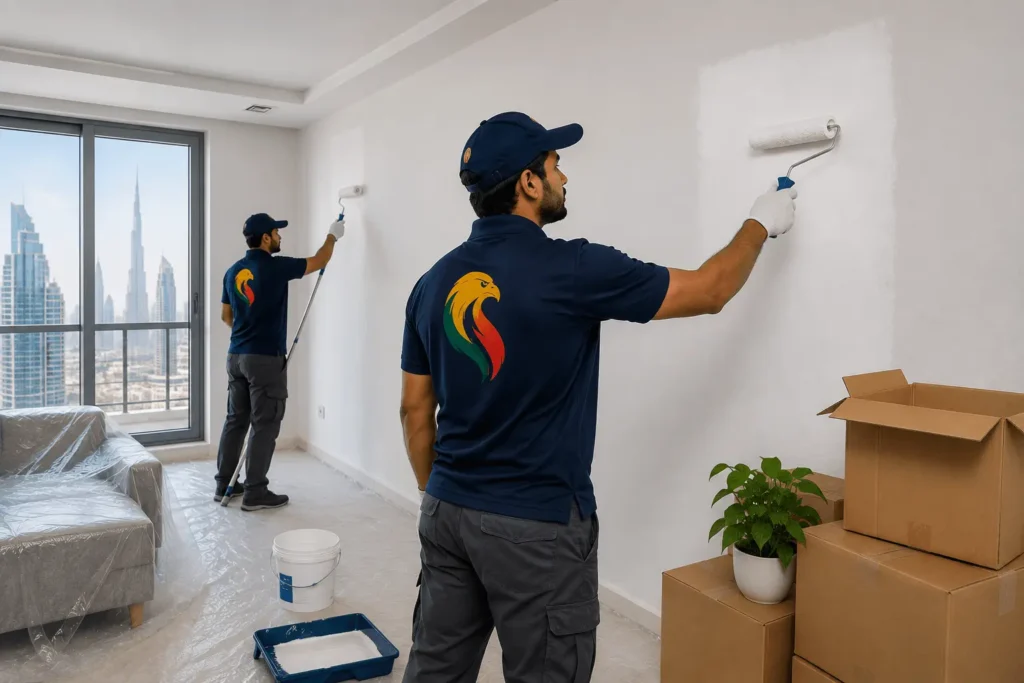
A feature wall works best when it frames something intentional, such as a headboard or built-in shelving. Choose its position around the room’s layout, rather than selecting the darkest shade first and looking for somewhere to put it.
Plan a Villa or Apartment Palette
A whole-home scheme needs continuity, but it does not require identical walls everywhere. Start with one main neutral and a small number of related colours. Look through open doors to see how neighbouring rooms read together. Carry an accent through textiles or furniture when repeating it on another wall would feel excessive.
| Planning decision | Villa | Apartment |
| Connected spaces | Link lounges, stairs and corridors | Coordinate living area and visible kitchen |
| Daylight | Assess rooms individually | Check glazing and nearby buildings |
| Accent placement | Use architectural features selectively | Give strong colours a defined zone |
| Palette continuity | Repeat undertones across rooms | Keep the main base visually consistent |
For a compact layout, see our colour guide for small Dubai apartments for more detailed small-space decisions. Property size alone does not determine the best shade; actual light and finishes matter more.
Test the Colour Before the Full Repaint
1. Apply generous samples on the actual walls using the proposed product where possible. Follow the manufacturer’s application and drying instructions.
2. View the samples at different times of day and under your normal evening lights. Check both bright and shaded parts of the room.
3. Compare them with flooring, cabinetry, curtains and furniture. Keep competing samples apart so they do not distort your judgement.
4. Confirm the manufacturer, shade code, product and finish before work begins. Keep that specification for future touch-ups. Online images and printed cards are starting points, not exact previews.
Finish and Preparation Matter Too
Colour and coating performance are separate choices. A low-sheen appearance may suit a bedroom, while busy family walls need a product with appropriate cleaning performance. Washability varies between products, so check the technical information rather than assuming every matt paint behaves alike. Resolve dampness or loose coatings before decorating.
Our guide to paint selection for Dubai’s climate explains how the surface and its exposure affect product choice. A fashionable shade cannot compensate for an unsuitable coating or poor preparation.
Plan Your Repaint With Emirates Painting Services
Bring your shortlisted colours, room photographs and any finishes you are keeping to the consultation. Discuss wall repairs, preparation, furniture protection, product suitability and samples before agreeing the scope. A clear quotation should identify the areas being painted, materials, preparation, exclusions and schedule.
Explore our interior painting service to discuss a room refresh or coordinated home repaint. Colour guidance is most useful when it considers the property as it is, including its light, furniture and wall condition.
Ready to narrow down your palette? Request a painting consultation with Emirates Painting Services. Share your property type, rooms and preferred colours so the conversation starts with the decisions that matter to your project.
Frequently Asked Questions
What are the most popular interior paint colours in Dubai in 2026
There is no verified local popularity ranking behind this guide. Warm neutrals, muted greens, earthy tones and deeper accents are useful directions to explore, with the final choice based on your home’s finishes and light.
Which paint colours suit modern Dubai villas
A coordinated neutral base with selected deeper rooms or accents can work well. Start with the stone, timber and cabinetry you are retaining, then connect neighbouring rooms through compatible undertones.
What colours work best in small Dubai apartments
Light neutrals are a practical starting point for visual continuity, but avoid choosing white automatically. Compare samples against the flooring and glazing, then introduce stronger colour where it supports the layout.
How should I test a paint colour before hiring a painter
Shortlist colour families first, then agree samples in the intended product and finish with the painter. Inspect the dried samples on your walls in daylight and evening light before approving the full application.