Villa Waterproofing Dubai: Paint, Membrane or Coating?
Home › Blog › Villa Waterproofing Dubai
Villa Waterproofing Dubai:
Paint, Membrane or Coating?
Waterproof paint, specialist coatings and waterproofing membranes are not interchangeable. The right choice for a Dubai villa depends on where moisture is coming from, the surface being treated, the condition of cracks and joints, and how much exposure the area receives. This guide shows you how to diagnose first — then specify correctly.
Key principle: If water is already entering your villa, find and repair the source before choosing any product. A good waterproofing decision starts with diagnosis — not with the label on the paint tin. A product that works as a weather-resistant finish on a sound facade may be completely unsuitable for a leaking roof or a terrace with failed detailing.
- Quick Comparison: Paint vs Coating vs Membrane
- Why Waterproofing Matters for Dubai Villas
- Find the Source of Water First
- Option 1 — Waterproof Paint
- Option 2 — Waterproof Coatings
- Option 3 — Waterproofing Membrane
- Detailed Comparison Table
- Why Surface Preparation Is Non-Negotiable
- 10-Step Waterproofing Process
- How Much Does Villa Waterproofing Cost?
- Common Mistakes to Avoid
- Can You Waterproof and Paint at the Same Time?
- How Emirates Painting Services Approaches This
- Final Verdict
- Frequently Asked Questions
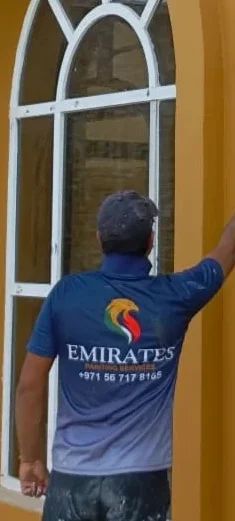
Villa exteriors in Dubai face strong UV, high surface temperatures, dust and humidity. Coastal homes add salt-laden air into the equation. Under these conditions, a product that performs as a weather-resistant decorative finish on a sound facade may be completely unsuitable for a leaking roof or a terrace with failed detailing.
The safest approach is to diagnose the moisture source first, repair the defect, prepare the substrate correctly and then specify the paint, coating or membrane system that fits the actual condition. Emirates Painting Services combines surface preparation, crack repair, priming and weather-resistant exterior finishes as part of its villa painting services in Dubai, making waterproofing and moisture diagnosis a natural part of exterior maintenance planning.
| Solution | Best Used For | Protection Level | Typical Villa Areas |
|---|---|---|---|
| Water-resistant / specialist paint | Surface protection + decorative finish | Light — Moderate | Sound exterior walls and facades |
| Waterproof / elastomeric coating | Flexible protective barrier where specified | Moderate — High | Exterior walls, parapets, boundary walls, selected exposed surfaces |
| Waterproofing membrane | Dedicated continuous water barrier | High | Roofs, terraces and system-specific high-exposure areas |
Dubai’s climate creates specific waterproofing challenges that do not exist in milder environments. Understanding them helps villa owners specify the correct system and set realistic expectations for its durability.
Heat and Strong UV
Exterior walls and roof surfaces repeatedly heat up during the day and cool after sunset. That thermal movement can expose weak joints, ageing sealants and existing hairline cracks. UV exposure also affects the performance of unsuitable exterior finishes over time.
Humidity and Condensation
A damp-looking wall does not always mean rainwater is entering from outside. High humidity, cold air-conditioned interiors and poorly ventilated areas can create condensation. Treating condensation as an exterior leak leads to unnecessary waterproofing work — while treating genuine ingress as condensation leaves the real defect unresolved.
Occasional Heavy Rain
Short periods of heavy rain can reveal weaknesses that remain invisible in dry weather: blocked drainage, failed joints, cracks around parapets, defective sealant and low points where water remains. The aim is not to blame every stain on rain, but to inspect the route water could realistically take.
Irrigation and Landscaping
Villa landscaping is an overlooked moisture source. Sprinklers that repeatedly hit boundary walls, wet soil against masonry, planters beside walls, pool splash zones and poor drainage can keep surfaces persistently damp. Before repainting a boundary wall, check whether the water source is actually irrigation or ground contact.
Coastal Salt Exposure
Coastal communities such as Palm Jumeirah add salt-laden air into the exposure mix. Salt accelerates corrosion of metalwork, penetrates paint film defects and contributes to efflorescence on masonry. Careful preparation, suitable primers and protective exterior coatings are particularly important in these locations.
Related: Villa Painting Palm Jumeirah — specialist villa painting for coastal exposure, salt air and high-humidity conditions.
Good waterproofing starts with diagnosis. A stain is evidence of moisture — not proof of where that moisture entered. Water can travel behind finishes or through construction joints before appearing somewhere else entirely. Painting over the visible stain without tracing the source produces a temporary cosmetic fix that usually fails within a season.
Roof or Terrace Leakage
Inspect drainage points, upstands, joints, penetrations, cracks and the existing waterproofing build-up. A ceiling stain below a roof should not be treated with interior paint until the source above has been investigated.
Cracks in Exterior Walls
Hairline surface cracking and deeper movement cracks are different problems. The repair method and coating specification should match the crack type and substrate — not be assumed from appearance alone.
Failed Sealant Around Windows and Doors
Ageing or separated sealant can let water bypass an otherwise sound painted wall. Joints, frames and perimeter details should be checked before recoating any surface near openings.
Plumbing Leakage
A concealed pipe or bathroom leak can create dampness that exterior waterproof paint cannot solve. Plumbing causes need plumbing repair — not a waterproofing system applied to the visible face.
Irrigation Against Exterior Walls
Repeated sprinkler impact or saturated soil can create recurring damp zones on boundary and garden walls. Identify and redirect the irrigation source before specifying any treatment.
Poor Roof or Surface Drainage
Standing water increases exposure at weak points. Blocked drains, low spots and inadequate falls should be corrected as part of the repair strategy, not after the new coating is applied.
Rising or Ground-Related Moisture
Low-level dampness needs investigation of ground contact, landscaping, drainage and the wall build-up — not a cosmetic topcoat. The cause determines whether a surface treatment is even relevant.
Condensation vs Water Ingress
Condensation is moisture forming on a surface; ingress is water entering through the building envelope. The remedies are fundamentally different, and misdiagnosis leads to the wrong treatment being applied.
Not sure where moisture is entering?A free professional site inspection maps damp areas, failed paint, cracks and drainage before any system is specified.
Waterproof / Water-Resistant Exterior Paint
Homeowners often use “waterproof paint” as a broad label for several different products. Standard exterior paint is primarily a decorative protective finish. Water-resistant or weather-resistant exterior paints are formulated to tolerate outdoor exposure better than standard interior products. Specialist waterproofing paints or coatings may provide greater moisture resistance, but their performance still depends entirely on the product specification, substrate condition and quality of preparation.
A quality exterior paint or suitable water-resistant finish can make sense on sound, properly prepared masonry or render where there is no active water penetration. It is particularly useful when a villa facade needs renewed colour alongside better weather resistance — the two goals are addressed by one correctly specified and applied product.
Advantages
- Combines a decorative finish with surface protection
- Available in a wide range of colours and finishes
- Usually simpler to maintain or refresh
- Can provide UV and weather resistance when correctly specified
- Lower material and installation cost than membrane systems
Limitations
- Not a cure for failed roof waterproofing or standing water
- Should not be expected to bridge significant or movement cracks
- Will not resolve deteriorated render or failed joints
- If water is entering from behind, a new coat on the visible face will blister or peel again
- Active leaks need the source corrected first
Waterproof / Elastomeric Protective Coating
A waterproof or protective coating is a purpose-designed layer or system applied over a prepared substrate to improve resistance to moisture and weather. The term covers different chemistries and performance levels, so the product data and intended use matter considerably more than the marketing label on the tin.
Elastomeric coatings are flexible protective coatings used on certain exterior masonry and concrete surfaces. Their flexibility can help accommodate limited substrate movement and bridge small cracks where the specific product is designed and applied for that purpose. They are not a substitute for repairing major cracks or structural movement — flexibility has limits that vary significantly between products.
Depending on the selected system, coatings may be suitable for villa facades, parapets, boundary walls, selected balcony surfaces, masonry and concrete exposed to weather. Product compatibility, surface condition and the amount of water pressure or exposure the area receives should always be assessed before specification.
Advantages
- Greater moisture resistance than basic decorative paint in suitable applications
- Flexible systems available for selected exterior masonry conditions
- Some products offer specified crack-bridging performance
- Can combine weather protection with an attractive exterior finish
- Often suitable for parapets and boundary walls
Limitations
- Cannot correct poor drainage or failed joints by itself
- Large or structural cracks must be repaired before application
- A defective roof system requires a dedicated waterproofing approach
- Product and substrate compatibility must be verified
- Active ingress must be traced and corrected first
Waterproofing Membrane System
A waterproofing membrane is designed to form a continuous barrier that resists water passing through the protected assembly. Unlike decorative exterior paint, a membrane is primarily part of a waterproofing system. Detailing at edges, drains, joints, penetrations and transitions is critical — a membrane with poor detailing at any of these points will fail at those points regardless of the quality of the field application.
- Liquid-applied membrane systems
- Sheet membrane systems
- Cementitious waterproofing systems
- Other substrate-specific and application-specific systems
Properly specified membranes are commonly considered for villa roofs, terraces, balconies where the build-up calls for waterproofing, and other exposed structural areas that require a continuous barrier. The exact system depends on the substrate, drainage, traffic, finish and existing construction — there is no universal membrane that suits every application.
Advantages
- Higher level of dedicated water-ingress protection when correctly designed and installed
- Continuous barrier without paint’s reliance on surface adhesion alone
- Suitable for roof and terrace applications where other systems may not be
- Compatible with protective screeds, tiles and finish layers
Limitations
- Greater preparation and detailing required than paint or coating
- Drains, penetrations and terminations must be treated correctly
- Some systems require protective screeds or compatible finishing layers
- Usually higher material and installation cost
- Not necessary for every villa waterproofing scenario
| Factor | Waterproof / Weather-Resistant Paint | Waterproof Coating | Membrane |
|---|---|---|---|
| Decorative finish | Excellent | Good — Excellent | Usually secondary |
| Exterior facade use | Excellent when appropriate | Excellent where specified | Application-specific |
| Roof use | Limited / product-specific | Product-specific | Often preferred as part of a system |
| Crack tolerance | Low | Can be higher (product-dependent) | System-dependent |
| Active leak solution | Usually no | Depends on cause / system | Often part of the repair system |
| Surface preparation | Required | Critical | Critical |
| UV exposure resistance | Product-dependent | Product-dependent | System-dependent |
| Relative cost | Usually lower | Medium | Usually higher |
| Installation complexity | Lower | Medium | Higher |
Best for Walls
Depends on wall condition and moisture source — sound walls with no ingress suit quality exterior paint or coating; affected walls need diagnosis first.
Best for Roofs
Usually a properly specified waterproofing system or membrane. Exterior wall paint should not be treated as a universal roof solution.
Best for Appearance + Protection
A quality exterior coating or paint system on a correctly prepared, sound surface.
Active Leak
Diagnose and repair the source first. No paint, coating or membrane product replaces addressing the entry point.
The most common reason waterproofing fails prematurely is not the product — it is what happened before the product was applied. Every waterproofing system, from basic exterior paint to a liquid-applied membrane, depends on the substrate condition and preparation quality for its durability.
The following preparation failures routinely cause new waterproofing to fail within months rather than years:
Painting over a damp wall. Moisture trapped between the substrate and the new coating causes blistering and adhesion failure.
Skipping primer. Some substrates and repaired areas need the correct primer to create uniform adhesion and control absorption before the topcoat is applied.
Poor surface preparation. Dust, chalking, salt deposits, contamination and weak material can prevent the new system from bonding properly to the wall.
Loose existing paint not removed. A new coating is only as sound as the layer beneath it. Adhesion to failed material produces early peeling.
Cracks painted instead of repaired. Coating over an untreated crack leaves the pathway and movement mechanism in place. The crack re-emerges through the new coating.
Wrong product for the substrate. A product designed for one surface or exposure condition may fail rapidly on another, regardless of how well it was applied.
Water entering from behind the coating. Hydrostatic or backside moisture causes repeated bubbling even when the visible surface was freshly painted.
Insufficient drying or curing. Each product has application and curing requirements. Rushing between repair, primer and topcoat stages reduces performance significantly.
For related preparation guidance, see Exterior Painting Services in Dubai and Home Painting Services in Dubai.
A durable waterproofing result follows a specific sequence. Skipping steps — particularly in the diagnosis, repair and preparation phases — is the most common reason villa waterproofing needs redoing within a few years rather than performing for its specified service life.
Site Inspection and Moisture Diagnosis
Map all damp areas, failed paint, cracks, joints, drainage and exposure conditions before any work is specified or priced.
Identify the Source of Water
Separate rain ingress, irrigation, plumbing, condensation and ground-related moisture. The source determines the correct system — not the visible stain.
Remove Loose or Failed Paint
Create a sound substrate by removing failed, loose or poorly bonded coatings rather than painting over weak material.
Repair Cracks and Damaged Render
Use repair methods compatible with the crack type and substrate. Allow repairs to cure fully before the next stage.
Prepare and Dry the Surface
Clean contamination, remove chalking and allow the substrate to reach suitable application conditions before primer is applied.
Apply the Correct Primer
Choose a primer compatible with the substrate and the selected waterproofing or coating system. Primer compatibility is non-negotiable.
Apply the Waterproofing System
Apply paint, coating or membrane according to the diagnosed condition, product specification and manufacturer’s system requirements.
Apply Compatible Exterior Finish Where Required
Some waterproofing systems need a decorative or UV-resistant finish; others form the final exposed layer. Confirm compatibility before specifying the finish coat.
Inspect Critical Joints and Details
Pay particular attention to windows, doors, parapets, drains, penetrations and transitions — these are the most common points of failure in any waterproofing system.
Final Quality Inspection
Check coverage, detailing, repairs and finish before handover. Confirm that no areas of loose material, missed detailing or incomplete coverage remain.
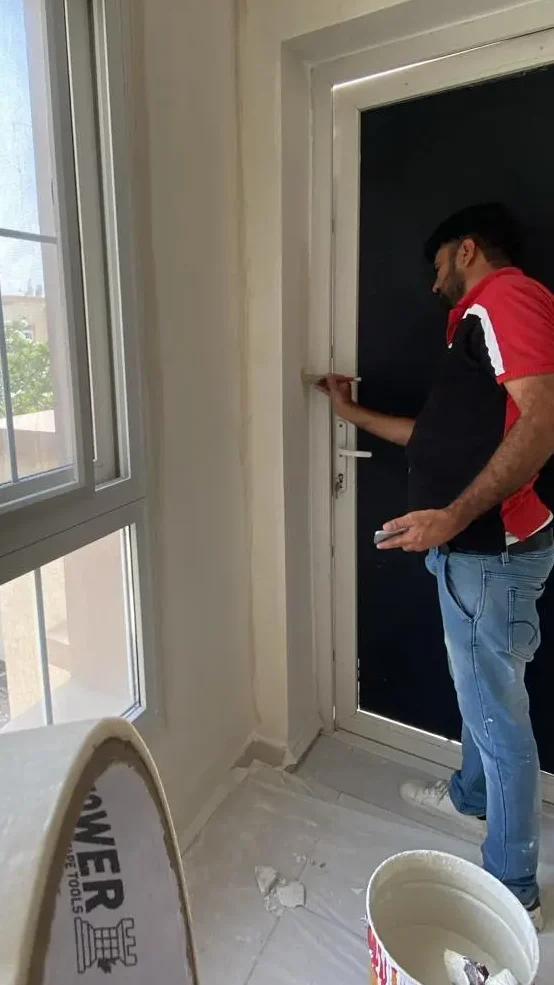
There is no responsible single price for villa waterproofing without knowing the area and the failure mechanism. A small facade-protection job and a failed roof waterproofing system involve different materials, access equipment, preparation scope, detailing and labour — they cannot be quoted the same way.
The quotation is typically affected by:
Emirates Painting Services offers a free site visit and quotation process for all villa exterior waterproofing and painting enquiries. Request a free villa inspection.
Buying “waterproof paint” before identifying the source of the leak
Painting directly over damp or wet walls
Filling every crack with ordinary wall filler without assessing crack type and movement
Ignoring roof drainage, outlets and areas where water ponds
Ignoring irrigation or wet soil beside boundary and garden walls
Using interior products on exposed exterior surfaces
Applying incompatible products over old coatings without testing compatibility
Choosing the cheapest system without considering substrate type and level of exposure
Treating the visible damp patch while ignoring the actual entry point
Yes — when the work is specified as one coordinated system and the sequence is correct. Waterproofing and painting should not be treated as two unrelated coats applied one after another without confirming compatibility.
The correct sequence: Inspection → moisture source repairs → waterproofing or protective system → compatible primer or finish where required → exterior painting
Combining necessary moisture repairs and protective treatment with an exterior repaint can be efficient because the same surfaces are already being inspected, repaired and prepared. The important point is compatibility: primers, membranes, coatings and decorative finishes should be selected to work together as a system — not chosen independently and applied sequentially without checking manufacturer compatibility.
For villa exterior work, the strongest approach is evidence-led rather than product-led: inspect first, identify defects, prepare the substrate and then apply the appropriate protective finish. The scope of work for every villa exterior project includes:
Explore Villa Painting Services Dubai, Exterior Painting Services Dubai or Home Painting Services Dubai for related services.
Choose Quality Exterior Paint When…
A sound exterior wall mainly needs decorative weather protection. No active ingress, no significant cracking, substrate is properly prepared and sound.
Consider a Waterproof Coating When…
A suitable exposed surface — parapet, boundary wall, masonry — needs a more protective or flexible coating system beyond what a standard exterior paint provides.
Consider a Membrane System When…
A continuous water barrier is required for a suitable roof, terrace or other high-exposure assembly — particularly where the build-up calls for a dedicated waterproofing layer.
Need an Inspection Before Repainting or Waterproofing?
A professional site inspection maps moisture sources, failed paint, cracks, drainage issues and surface condition before any system is specified. Emirates Painting Services provides this free and without obligation — so you have a clear, written recommendation based on the actual condition of your villa before spending anything.