How to Hide WallImperfections with Paint
Low-sheen paint can soften small flaws. It cannot repair holes, loose plaster, active cracks, peeling coatings or dampness. Knowing which is which saves you painting twice.
Quick Answer
Matte or other low-sheen paint can make small scratches, light patch marks and mild unevenness less noticeable, because it reflects less direct light. A thoughtful colour and a consistent roller finish also help.
If a wall looks uneven when sunlight runs across it, the problem may be more visible after painting than it looked in the shade. That is common in Dubai rooms with large windows, wall-washing lights or spotlights.
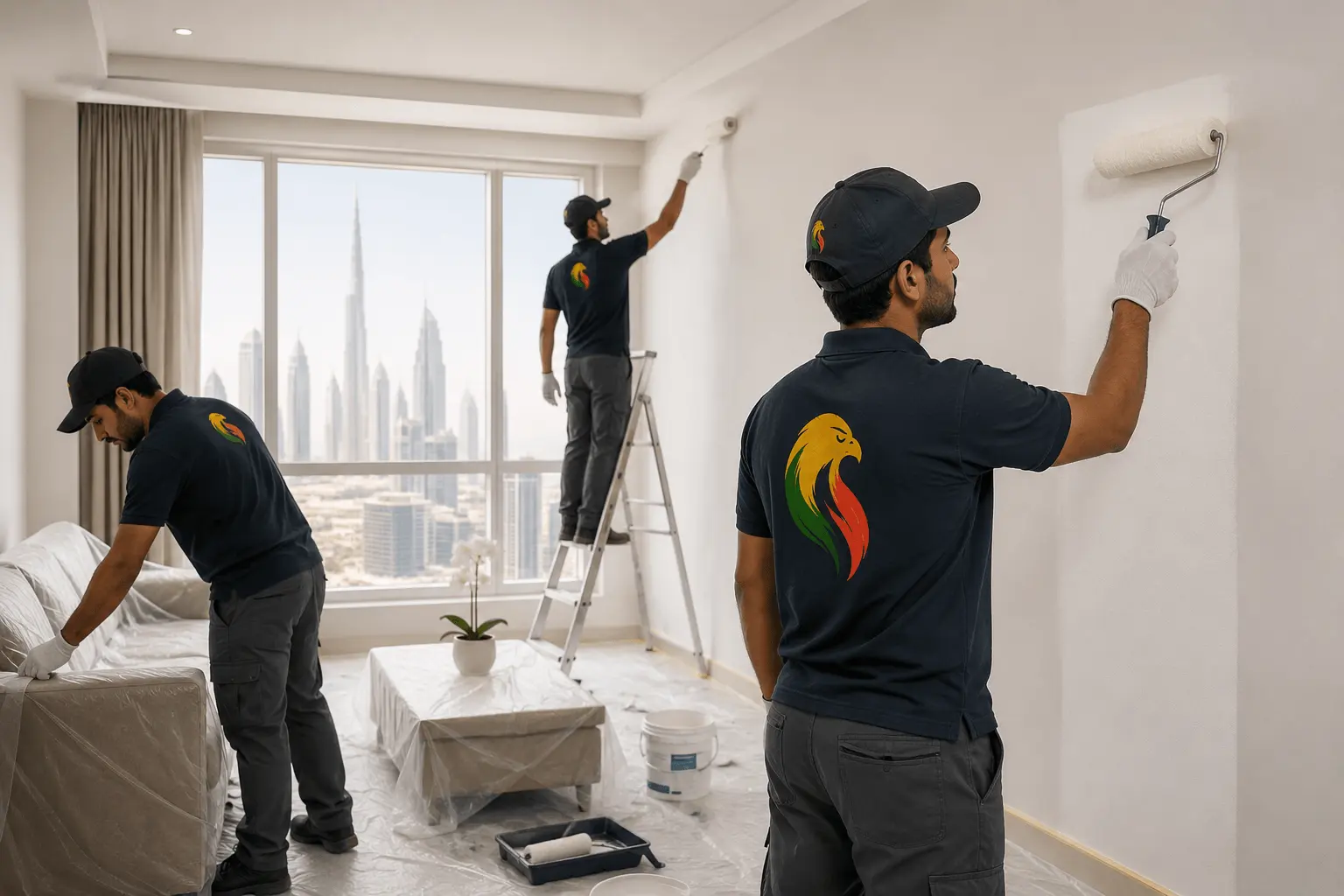
Can Paint Actually Hide an Imperfect Wall?
A finish coat changes how the wall catches light, but it follows the surface underneath. Low sheen reduces the sparkle on shallow ridges and roller texture. It does not fill a nail hole or flatten a raised patch of filler.
Paint Can Visually Soften
- Very fine scratches
- Slight surface variation
- Minor old patch marks, after they have been prepared
Repair Comes First For
- Holes
- Flaking paint
- Loose or bulging plaster
- Recurring cracks
- Water stains and damp areas
Wall Problem and Best Next Step
| What You See | Will Paint Alone Hide It? | Sensible Action |
|---|---|---|
| Fine scratch on sound paint | Often less noticeable | Light preparation and suitable low-sheen finish |
| Small nail or screw hole | No | Fill, sand, prime as needed and repaint |
| Patch with different porosity | Sometimes, but may show through | Feather edges and spot-prime if specified |
| Roller lines or minor roughness | May soften, not disappear | Assess sanding and application method |
| Slight waviness in sound plaster | Partially | Test matte or an intentional texture |
| Recurring hairline crack | No | Identify cause and repair appropriately |
| Peeling or bubbling paint | No | Remove loose coating and find the cause |
| Damp patch, mould or water stain | No | Address moisture, clean or treat, then specify system |
| Bulging plaster or major unevenness | No | Repair or level the substrate before painting |
Why Some Defects Stand Out After Painting
Side Light Makes Shadows
A window or wall washer can illuminate a tiny ridge from one side and throw a shadow on the other. This is why a patched wall can appear smooth under general ceiling light but uneven at sunset in a Dubai apartment.
Shinier Paint Reflects More Sharply
A glossy wall draws attention to changes in angle and texture; a matte film diffuses the reflection. That is a visual effect, not a repair. A high-quality washable matte product may suit a busy room, while a basic flat product may scuff easily — check the specific manufacturer’s cleaning guidance.
Uneven Absorption Changes the Look
Fresh filler and older painted areas may absorb a new coat differently. A compatible primer or sealer can help even out porosity where required, but it will not flatten a poorly sanded repair. Colour contrast and poor rolling technique can also reveal old work.
Which Paint Finish Hides Imperfections Best?
Less reflection on the left, more on the right.
| Finish | Visual Effect on Minor Flaws | Cleaning Consideration | Common Use |
|---|---|---|---|
| Flat | Very low reflection; forgiving | Often more prone to marks, depending on product | Ceilings and low-contact walls |
| Matte | Low reflection; strong starting point | Washability varies widely by range | Bedrooms and living rooms |
| Eggshell / low sheen | Some reflection | Often a balance, product dependent | General living areas |
| Satin | More reflection; repairs may show | Often chosen where wiping matters | Corridors and family spaces |
| Semi-gloss or gloss | Highlights unevenness | Typically used on compatible trim | Doors, frames and well-prepared details |
For an imperfect living-room wall, start by sampling a matte interior product. For a busy hallway, you may prefer a washable matte or low-sheen product even if a flat finish is more forgiving visually.
Is Matte Always the Answer?
Matte is often the most practical visual starting point, but room use sets limits. Frequent fingerprints, children’s activities or kitchen splashes can make cleanability a higher priority. A modern washable matte may offer a suitable compromise when the manufacturer specifies it for the surface.
Inspect a test area under normal daylight and evening lighting before committing to an entire room.
Cosmetic flaw, or something that needs repair?
Send photos taken in ordinary light and in side light. We will tell you which marks paint can soften — and which need fixing before anyone opens a tin.
Does Colour Help Hide Uneven Walls?
A muted, lower-contrast shade can draw less attention to small variations than an extremely bright white beside a contrasting trim. Warm off-white, greige, taupe and soft earthy colours may be worth sampling where they fit the flooring and furniture.
Compare sample boards in the actual room. Look at them by the window, near the corridor and with your usual LEDs on. Check how the chosen colour meets the skirting, repaired patches and adjacent walls. If you are considering white, test a wall product in the room rather than relying on a shade name or a ceiling-paint specification.
Seven Ways to Make Minor Imperfections Less Visible
- Choose low sheen for the main wall. Matte usually reflects less light across small variations than satin or gloss. Match the chosen product to cleaning needs.
- Make repairs flush before painting. Fill small holes with a suitable compound, allow it to dry and sand the edges smooth. Inspect from the side rather than only from straight ahead.
- Prime the areas that need it. Bare filler, stains, strong colour changes and dissimilar surfaces may need different preparation; follow the coating manufacturer’s system.
- Test a forgiving colour in the real light. Compare at midday and under your evening lamps instead of choosing from a phone screen.
- Consider a deliberate texture where appropriate. An even decorative texture can visually break up mild waviness, but it must be sampled and cannot stabilise damaged plaster.
- Use a roller suited to the wall and coating. Excessively coarse roller texture on a smooth wall can create another visible defect. Follow the manufacturer’s applicator guidance.
- Apply even coats at the specified rate. Keep a consistent technique and respect drying and recoat times. Extra paint dumped onto a problem spot rarely blends into the surrounding wall.
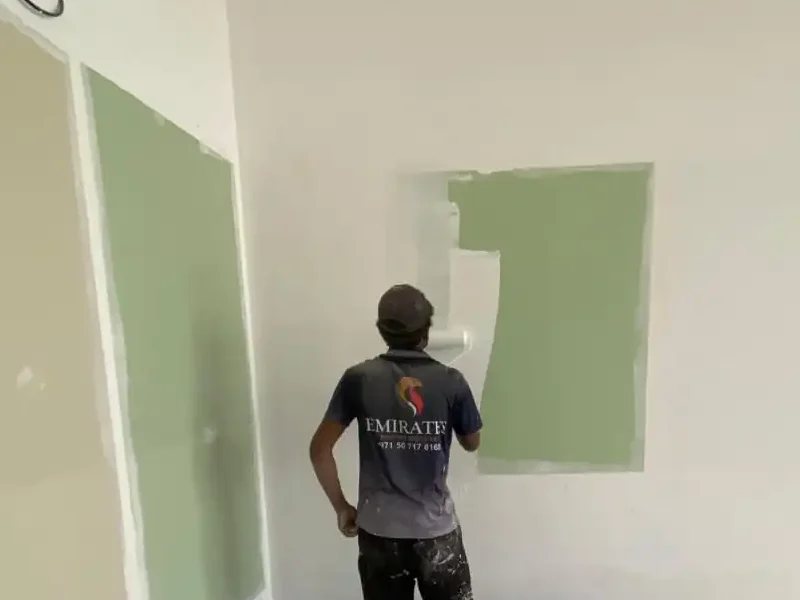
Can Textured Paint Conceal an Uneven Wall?
A textured finish creates intentional variation, which can make small cosmetic irregularities less obvious. It may work for a feature wall with sound but slightly wavy plaster, or a surface with old repairs that would otherwise be highlighted by a smooth satin finish.
We have a dedicated texture paint service in Dubai for comparing decorative finishes and application options.
Prepare First, Then Choose Paint
The sequence is short even when the repair work is not:
Primer helps with adhesion or uniform absorption when correctly specified. Some primers can help isolate particular stains as part of a system. Primer is not a substitute for filler, plaster repair or a moisture fix.
For more detail on sound old coatings, follow our guide to painting over old paint in a Dubai apartment.
Choose Differently for Each Dubai Space
When Should You Call a Professional?
A small scuff or isolated nail hole on a dry, stable wall can be a manageable DIY repair. Ask for an assessment when:
- Many patches remain visible
- A crack returns
- Plaster is loose
- Stains reappear
- A large wall is exposed to strong side light
Large villas, stairwells and high ceilings also make consistent preparation and application more demanding.
Common Mistakes to Avoid
- Adding extra finish coats over a raised patch — it does not level it
- Using glossy paint on a wavy wall, which usually makes it more obvious
- Painting over dampness and leaving the cause untouched
- Using heavy texture to cover failing plaster
- Sanding without removing dust, which spoils adhesion
- Ignoring the roller and the lighting, which can create or reveal marks
Our guide to common painting mistakes in Dubai homes covers the broader preparation issues.
Frequently Asked Questions
What paint finish hides wall imperfections best?
Is matte or eggshell better for uneven walls?
Will dark paint cover dents and patches?
Can thick paint hide a crack?
Does primer hide imperfections?
Does textured paint hide uneven plaster?
Should I paint over peeling paint in an apartment?
Can a bathroom wall be repainted over a damp patch?
How do painters fix a visibly uneven wall?
Final Takeaway
For cracks, peeling, dampness or failing plaster: identify and repair the cause first.
Not Sure Which Category Your Wall Falls Into?
Send photos in ordinary and side lighting. We will assess the wall condition, separate cosmetic marks from real defects, recommend preparation and finish, and quote the scope in writing. Free assessment, no obligation.